Compound record · Skin, hair & cosmetic
GHK-Cu
Also Copper peptide · Copper tripeptide-1 · Glycyl-L-histidyl-L-lysine copper · GHK-copper · Cu-GHK · GHK
Copper-binding tripeptide
Topical copper peptide with modest cosmetic data; injectable use is untested
Record reviewed 1 September 2026 · 6 references
In the AERVYN range
3 pens carry GHK-Cu
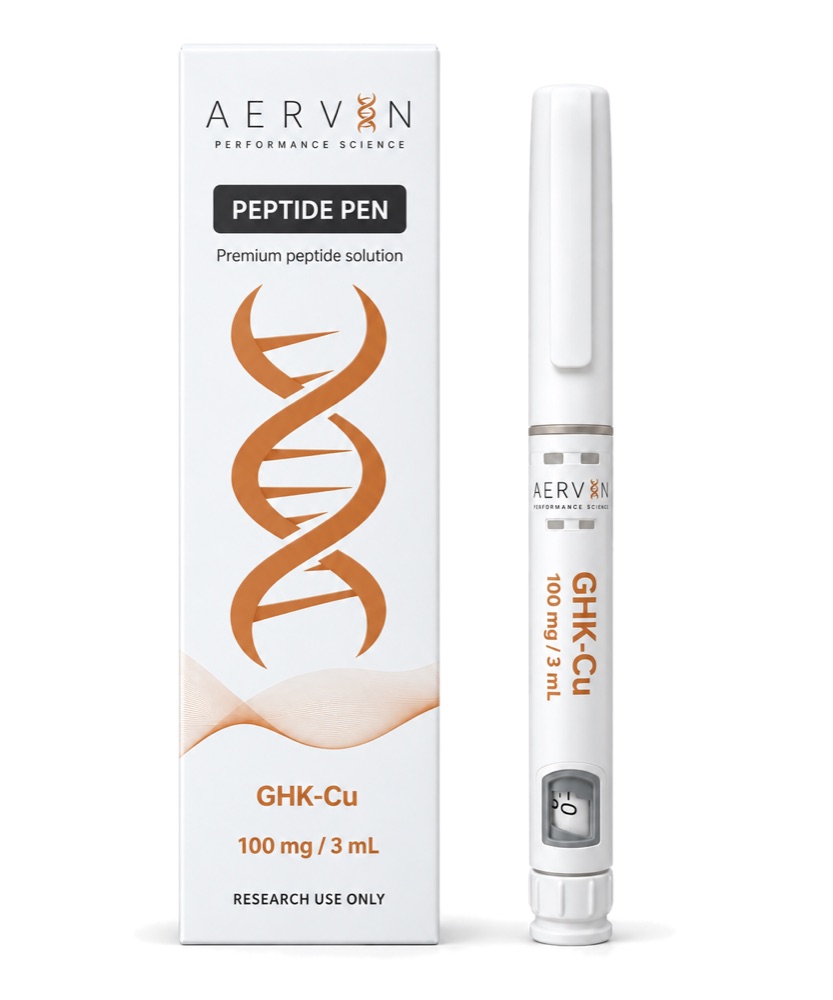
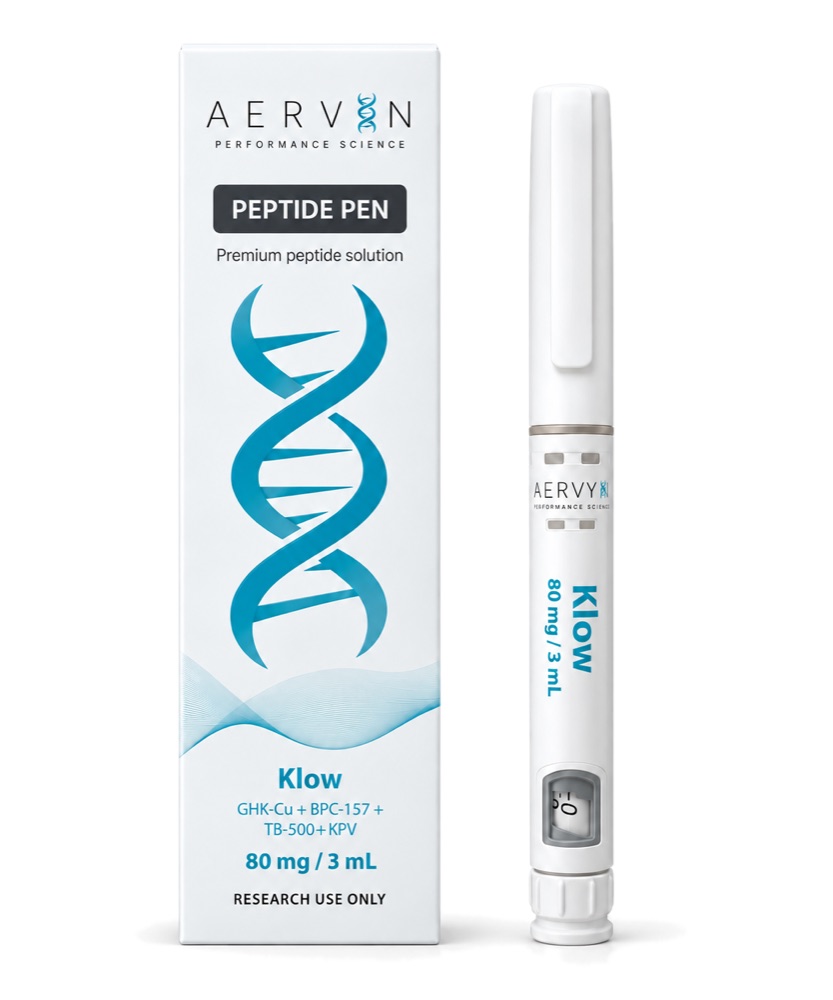
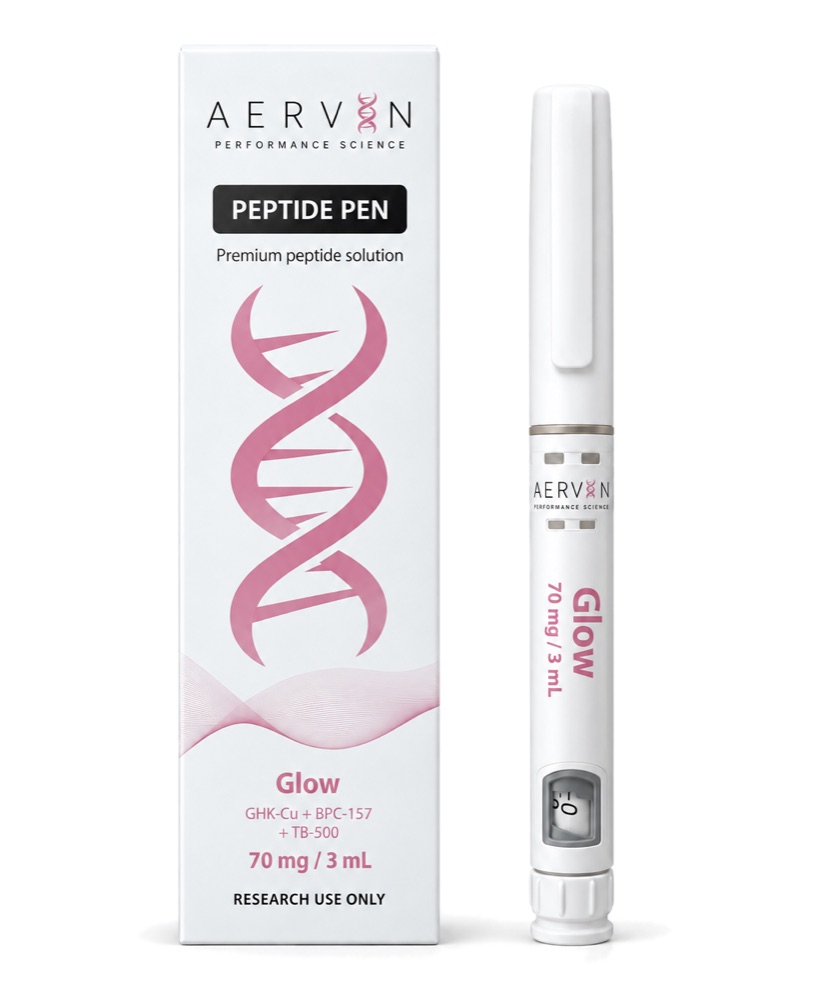
- Class
- Naturally occurring copper-binding tripeptide
- Human evidence
- Small 12-week topical studies (n ≈ 70); none for injection
- Regulatory status
- Legal cosmetic ingredient; not a medicine anywhere
- Anti-doping
- Not named on the WADA Prohibited List
- Route in studies
- Topical cream; injected use is unregulated
01 Overview
What GHK-Cu is
Summary
GHK-Cu is the copper complex of a three-amino-acid peptide found naturally in human plasma, saliva and urine, where its concentration falls with age. It has been a cosmetic ingredient since the 1990s, and small, mostly manufacturer-run studies report firmer, smoother facial skin after 12 weeks of topical use. Injectable GHK-Cu sold online has never been studied in people and is not an authorised medicine anywhere.
Mechanism
In cell culture and animal wounds GHK-Cu delivers copper to enzymes involved in collagen and elastin cross-linking, stimulates fibroblasts to make collagen, glycosaminoglycans and decorin, modulates matrix metalloproteinases, dampens inflammation and promotes new blood-vessel and nerve growth. Topically it penetrates the outer skin layers; systemic effects after injection are unstudied in humans.
02 Evidence by goal
What has been shown, for which goal
Grades follow one scale across the site. Limited overall means: small or short human studies, mixed results, or evidence mainly for a related use.
Skin & cosmetic
LimitedSmall 12-week facial-cream studies (n ≈ 70, presented as conference abstracts and book chapters rather than full peer-reviewed trials) reported improved skin firmness, density and fine lines; comparisons against vitamin C and tretinoin creams were pilot-sized. Effects are modest and the best data are industry-linked.
Hair
PreliminaryCopper peptides enlarged hair follicles and prolonged the growth phase in mouse and laboratory studies; early manufacturer studies of copper-peptide hair products were small and not published in full. No robust human trial exists.
Injury & recovery support
InsufficientWound-healing benefits are documented in rats, rabbits, dogs and pigs and in small studies of chronic skin ulcers, but there are no human data on tendon, ligament, joint or muscle injury and none at all for injected GHK-Cu.
03 Regulatory status
Where it is authorised, and for what
Status is recorded per jurisdiction from regulator sources and reviewed by hand. It is never inferred from another region's decision.
United Kingdom
Not authorisedNot authorised as a medicine; permitted as a topical cosmetic ingredient.
Copper tripeptide-1 is a legal cosmetic ingredient under the UK Cosmetics Regulation, provided products make only cosmetic claims. No MHRA-licensed medicine contains GHK-Cu; injectable vials sold as 'research chemicals' are unlicensed and cannot be marketed for human use.
04 Dosing research
What the evidence says about exposure
Published human studies and the doses, routes and durations they used — reported as research information, not a recommendation.
Research information — not a recommendation. These are the exposures used in published human studies, reported so you can see what has been tested. They are not dosing instructions and do not apply to any individual.
Study 01
GHK-Cu facial cream in women with photoaged skin (conference presentation)
Leyden J, Stephens T, Finkey M, Appa Y, Barkovic S. Proc Am Acad Dermatol 60th Annual Meeting 2002, abstract P68
- Design
- Controlled 12-week facial study (full methods not published in a peer-reviewed journal)
- Population
- Women with mild to advanced facial photoageing
- Participants
- n = 71
- Duration
- 12 weeks
- Route
- Topical
- Doses studied
- GHK-Cu-containing facial cream applied to the face; peptide concentration not reported in the abstract
- Outcome at this exposure
- Reported improvements in skin laxity, clarity and appearance, reduced fine lines and wrinkle depth, and increased skin density and thickness compared with control.
- Adverse events observed
- No significant irritation reported; the abstract gives no systematic adverse-event data.
Study 02
Topical copper-peptide cream compared with vitamin C cream and tretinoin on skin ultrastructure
Abdulghani AA et al., Disease Management and Clinical Outcomes 1998;1(4):136–141 · Source
- Design
- Pilot clinical, histological and ultrastructural comparison
- Population
- Adult women; creams applied to thigh skin
- Participants
- Not reported
- Duration
- 12 weeks
- Route
- Topical
- Doses studied
- Copper-peptide cream, vitamin C cream, melatonin cream or tretinoin applied daily; peptide concentration not reported
- Outcome at this exposure
- Increased collagen production on biopsy in 70% of participants using the copper-peptide cream versus 50% with vitamin C and 40% with tretinoin — a small pilot without formal statistics.
- Adverse events observed
- Copper-peptide cream was well tolerated; tretinoin caused the expected irritation.
Human data exist only for topical creams, and even these are small, industry-linked studies that did not report the peptide concentration and were never published as full randomised trials. There are no human studies of injected GHK-Cu — no pharmacokinetics, no dose-finding, no safety data. Injection 'protocols' circulating online (often 1–2 mg per day) have no evidential basis.
05 Safety
Adverse effects and contraindications
Common effects seen in trials or reports, serious effects that warrant urgent review, and conditions under which use is not appropriate or needs assessment.
Common adverse effects
- Topical: mild stinging, redness or itching at application site
- Topical: occasional contact dermatitis
- Topical: blue-tinted product may discolour fabrics
- Injected: no systematic human data — injection-site reactions reported by users
Serious adverse effects
- Injected: unknown — no human safety studies
- Injected: theoretical copper accumulation with repeated systemic dosing
- Injected: immune reactions to the peptide or impurities
- Injected: infection from non-sterile products
- Topical: serious reactions are rare; allergic contact dermatitis is possible
Contraindications
- CancerCaution
GHK-Cu promotes angiogenesis and broadly alters gene expression in laboratory models. Topical cosmetic use is not known to be a problem, but systemic (injected) use in anyone with a current or previous cancer is uncharted.
- Liver diseaseCaution
Injected GHK-Cu delivers copper systemically. People with liver disease or a copper-handling disorder such as Wilson's disease should not add exogenous copper without specialist advice.
- Autoimmune conditionCaution
Injected peptides of uncertain purity carry an immunogenicity risk that has not been evaluated for GHK-Cu; relevant where there is autoimmune disease or immune-modifying treatment.
Do not use = should not be used · Caution = needs assessment
06 Interactions
Medicine classes that need review
Grouped by how seriously the combination should be taken. Class labels match the medicines questionnaire in the assessment.
- Major
- Moderate
- Minor
Moderate
Monitoring or dose review is usually advised.
Cancer treatment
Chemotherapy, hormone therapy, immunotherapy
Interactions are unstudied. A pro-angiogenic peptide given systemically could in theory oppose anti-angiogenic cancer therapy; disclose any use to the treating oncologist.
Minor
Generally compatible; awareness is sufficient.
Corticosteroid
Prednisolone, dexamethasone, hydrocortisone
Topical corticosteroids thin skin and slow wound healing; there are no data on combining them with copper-peptide products, but the effects would be expected to oppose each other.
07 Pregnancy & breastfeeding
Status in pregnancy
Topical cosmetic use has not been linked to reported harm but has not been formally studied. Injected GHK-Cu has no human data at all and is not appropriate while pregnant, trying to conceive or breastfeeding.
08 Monitoring
What is usually monitored
Parameters that trials and product information track. A clinician decides what applies to an individual.
- 01Skin tolerance during the first weeks of topical use
- 02Realistic before-and-after comparison at 12 weeks, the duration used in the studies
- 03Any injection-site infection or systemic symptoms if injected products have been used
- 04Liver function and copper status if injected regularly (no human reference data exist)
09 Combinations
What is known about combining it
Notes on pairing with other compounds in the directory: whether the combination has been studied in people, and where mechanisms overlap.
Collagen peptides
No human studies
Overlap · Both are marketed for skin firmness and collagen support.
Different routes (topical peptide, oral supplement) and low individual risk, but no study has tested the combination; any benefit is assumed rather than shown.
BPC-157
No human studies
Overlap · Both are promoted for repair and both are angiogenic in laboratory models.
No human data on the combination, and no human data on injected GHK-Cu alone.
TB-500
No human studies
Overlap · Both are promoted for repair and both are angiogenic in laboratory models.
No human data on the combination; TB-500 has no human data at all.
KPV
No human studies
Overlap · Both are marketed for skin repair — GHK-Cu for collagen and remodelling, KPV for inflammation.
Commonly blended, as in the Klow pen. There is no human study of either injected compound alone, let alone together.
NAD+
No human studies
No human data on the combination and no shared mechanism has been demonstrated.
Discuss any proposed combination with a qualified healthcare professional.
10 Source considerations
Supply, quality and legitimacy
How the compound reaches people in practice, and what that means for product quality.
- 01Topical products from established cosmetic brands are manufactured under cosmetic GMP and are the only form with any human data.
- 02Injectable 'GHK-Cu' vials come from unregulated research-chemical suppliers with no GMP assurance; identity, copper content, purity, sterility and endotoxin levels are unverified.
- 03In September 2023 the FDA cited significant safety risks for injectable GHK-Cu in compounding; the 2026 removal from that list was procedural and did not clear it.
- 04Copper peptides can be destabilised by strong acids (for example high-strength vitamin C serums) in the same formulation; product compatibility is a formulation, not a medical, question.
11 Questions for your clinician
Take these to your appointment
Specific to this compound. The personal assessment adds questions drawn from your own history and medicines.
- 01Is a topical copper-peptide product a reasonable addition to an evidence-based skincare routine (sunscreen, retinoids) for my concern?
- 02Is there any reason — cancer history, liver or copper disorders, autoimmune disease — that a systemic copper peptide would be a concern for me?
- 03If hair loss is my goal, what authorised treatments have actual trial evidence?
- 04If I have already injected GHK-Cu, is any testing worthwhile?
The personal assessment tailors this list to your responses.
12 Alternatives
Compounds with stronger evidence or firmer regulatory footing
Listed for overlapping goals. Whether any is appropriate depends on your history — the assessment maps that for you.
13 References
Sources behind this record
Regulator documents and peer-reviewed publications used to derive every grade and statement above.
- 01Pickart L, Margolina A. Regenerative and protective actions of the GHK-Cu peptide in the light of the new gene data. Int J Mol Sci 2018;19:1987
- 02Pickart L, Vasquez-Soltero JM, Margolina A. GHK peptide as a natural modulator of multiple cellular pathways in skin regeneration. Biomed Res Int 2015;2015:648108
- 03Leyden J et al. Skin care benefits of copper peptide containing facial cream. Proc Am Acad Dermatol 60th Annual Meeting 2002 (abstract)
- 04Abdulghani AA et al. Effects of topical creams containing vitamin C, a copper-binding peptide cream and melatonin compared with tretinoin on the ultrastructure of normal skin. Dis Manag Clin Outcomes 1998;1:136–141
- 05Maquart FX et al. Stimulation of collagen synthesis in fibroblast cultures by the tripeptide-copper complex GHK-Cu2+. FEBS Lett 1988;238:343–346
- 06FDA — Bulk drug substances nominated for use in compounding under section 503A (GHK-Cu category notes, updated May 2026)
The Peptide Checkup provides educational information and a structured summary of published research and regulatory status. It is not medical advice, does not diagnose or treat any condition, and does not replace a consultation with a qualified healthcare professional.
Personal assessment
Check GHK-Cu against your history
Seven minutes of structured questions about your goal, history and medicines, mapped against this record by a deterministic, clinician-reviewable rules engine. The report tells you when not to buy.